HOME AUTOMATION BASED ON ARTIFICIAL INTELLIGENCE: STRATEGIES FOR ENERGY EFFICIENCY AND USER COMFORT
DOI:
https://doi.org/10.56238/ramv20n16-014Keywords:
Home Automation, Artificial Intelligence, Smart Homes, Energy Efficiency, Internet of ThingsAbstract
Home automation based on artificial intelligence has emerged as an important technological innovation applied to smart homes. The integration of sensors, actuators, the Internet of Things (IoT), and intelligent algorithms allows for the automated control of systems such as lighting, air conditioning, security, and energy management, providing greater comfort, convenience, safety, and energy efficiency to users. Artificial intelligence enables the continuous analysis of data and behavioral patterns, allowing systems to automatically adapt to the needs of residents. In addition to the benefits related to optimizing electricity consumption and improving quality of life, home automation also presents challenges related to implementation costs, digital security, interoperability between devices, and user adaptation to new technologies. Thus, it is concluded that home automation with artificial intelligence has great potential to transform contemporary domestic environments, making them more efficient, sustainable, and intelligent.
References
[1] JO, Hana; YOON, Yong Ik. Intelligent smart home energy efficiency model using artificial TensorFlow engine. Human-centric Computing and Information Sciences, v. 8, art. 9, 2018.
[2] MEHMOOD, Asif; LEE, Kyu-Tae; KIM, Do-Hyeun. Energy Prediction and Optimization for Smart Homes with Weather Metric-Weight Coefficients. Sensors, v. 23, n. 7, art. 3640, 2023.
[3] MICHOS, Stavros; DALAGDI, Eleanna; VRAKAS, Dimitrios. Intelligent energy management systems: a review. Artificial Intelligence Review, v. 56, p. 11635–11674, 2023.
[4] RICQUEMBOURG, Vincent et al. ThinkHome: Energy Efficiency in Future Smart Homes. EURASIP Journal on Embedded Systems, v. 2011, art. 104617, 2011.
[5] Figura 1 — PIXABAY. Lar inteligente e automação residencial. Disponível em: Pixabay Automação Residencial. Acesso em: 06 maio 2026.
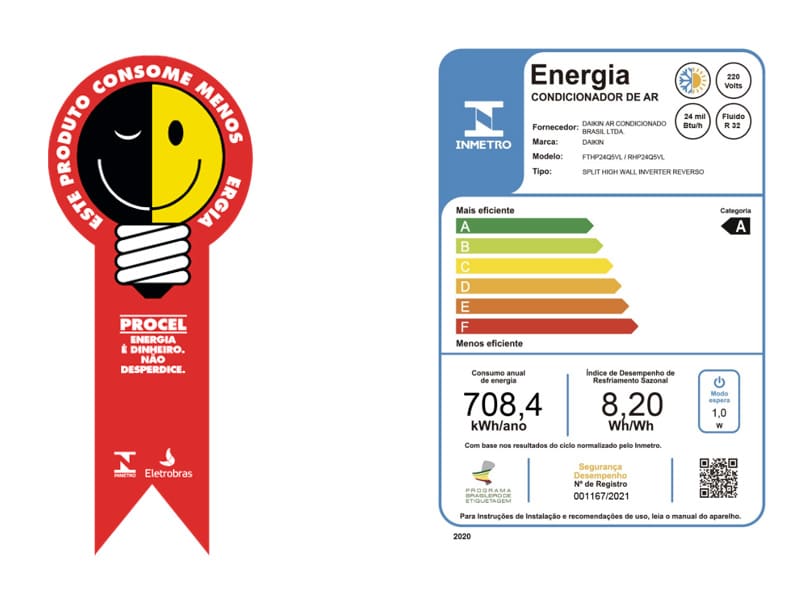
[6] Figura 2 — DAIKIN. Selo Procel Inmetro. 2023. Disponível em: https://www.daikin.com.br/blog/wp-content/uploads/2023/05/Selo-Procel-Inmetro.jpg. Acesso em: 11 maio 2026.
[7] Figura 3 — PORTAL DA AUTOMAÇÃO RESIDENCIAL. Estrutura funcional de uma residência inteligente automatizada. 2024. Disponível em: https://www.portaldomarketing.com.br/. Acesso em: 15 maio 2026.
[8] Figura 4 — CONSTAT. Automação residencial e acessibilidade para idosos. 2024. Disponível em: https://constat.com.br//media/resize/1920x1920/blogpost/100/6538faa444294.jpg. Acesso em: 15 maio 2026.
[9] ALI, Bahaa Abdul Hadi et al. Internet of Things for Smart Homes: Technologies, Protocols, and Applications. Journal of Network and Computer Applications, v. 123, p. 3–33, 2018.
[10] GUBBI, Jayavardhana et al. Internet of Things (IoT): A Vision, Architectural Elements, and Future Directions. Future Generation Computer Systems, v. 29, n. 7, p. 1645–1660, 2013.
[11] MARIKYAN, Davit; PAPAGIANNIDIS, Savvas; ALAMANOS, Eleftherios. A Systematic Review of the Smart Home Literature: A User Perspective. Technological Forecasting and Social Change, v. 138, p. 139–154, 2019.
[12] BALTA-OZKAN, Nazmiye et al. Social Barriers to the Adoption of Smart Homes. Energy Policy, v. 63, p. 363–374, 2013.
[13] AHMAD, Muhammad Waseem et al. A Review on Applications of ANN and SVM for Building Electrical Energy Consumption Forecasting. Renewable and Sustainable Energy Reviews, v. 33, p. 102–109, 2014.
[14] PAL, Dipankar et al. Smart Homes and Internet of Things: A Bibliometric Study. Journal of Cleaner Production, v. 301, art. 126996, 2021.
[15] ALAM, Mohammad Rizwan et al. Energy Management in Smart Homes Using Internet of Things: Concepts and Challenges. IEEE Access, v. 5, p. 761–771, 2017.
[16] YANG, Ray et al. Home Energy Management System Based on Artificial Intelligence and Internet of Things. Energy and Buildings, v. 174, p. 569–578, 2018.
[17] CHUI, Michael; LÖFFLER, Markus; ROBERTS, Roger. The Internet of Things. McKinsey Quarterly, v. 2, p. 1–9, 2010.
[18] HOSSAIN, Md. Shamim. Cloud-Supported Cyber–Physical Localization Framework for Patients Monitoring. IEEE Systems Journal, v. 11, n. 1, p. 118–127, 2017.
[19] SHARMA, Vivek et al. Artificial Intelligence Applications for Smart Home Automation. International Journal of Scientific Research in Computer Science Engineering and Information Technology, v. 5, n. 2, p. 102–109, 2019.
[20] BECERRA, Victor et al. Smart Home Technologies: Applications and Challenges. Sensors, v. 22, n. 5, art. 1897, 2022.
[21] PARK, Eunil et al. IoT-Based Smart Homes: User Acceptance and Adoption Factors. Energy and Buildings, v. 148, p. 363–372, 2017.
[22] KHAN, Rafiullah et al. Future Internet: The Internet of Things Architecture, Possible Applications and Key Challenges. International Conference on Frontiers of Information Technology, p. 257–260, 2012.
[23] MINOLI, Daniel; SOHRABY, Kazem; OCCHIUZZI, William. IoT Considerations, Requirements, and Architectures for Smart Buildings. IEEE Internet of Things Journal, v. 4, n. 1, p. 269–283, 2017.
[24] LI, Shancang; XU, Li Da; ZHAO, Shanshan. The Internet of Things: A Survey. Information Systems Frontiers, v. 17, p. 243–259, 2015.